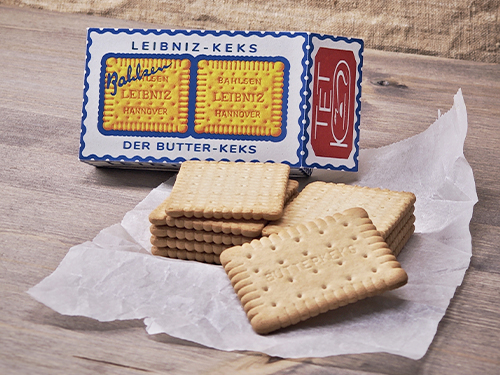
[How to] Pack butter keks
Leibniz-Keks: A Taste of Home in the Breadbag
Leibniz-Keks from Bahlsen was one of the most widely used commercial products in the German army during World War II. Unlike specially developed military food, it was an identical product that citizens could buy in ordinary shops in the Reich. It reached the hands of soldiers mainly through Canteens (field stores), field post packages (Feldpost) or as part of the supplementary food for selected corps.
History and iconic design
Hermann Bahlsen began producing these butter biscuits in 1891 in Hanover. It was he who introduced the term Keks (derived from the English cakes) into the German language. The characteristic design of the biscuit with 52 teeth and embossed inscription has remained practically unchanged since the end of the 19th century, making it one of the longest-produced products in the history of the food industry.
During the war years, Bahlsen was a key supplier of long-life pastries for the Wehrmacht. The yellow-blue paper packaging was a fixed part of the contents of backpacks and bread bags. The high butter and sugar content made these biscuits a valuable source of energy in field conditions. For a soldier in the field, Leibniz was above all a psychological connection to home and peaceful life, while the product maintained its quality even at a time when substitutes (Ersatz) began to be used en masse in other food industries.
Why a replica from Warcopy?
The paper packaging was designed as disposable. The thin paper sleeve quickly wore out, got wet or tore in the conditions of front-line life. For this reason, authentic war packaging in preserved condition is almost impossible to obtain today. Our reproduction accurately copies the period typography, colors and graphic layout, so that your period equipment looks authentic down to the last detail.
Now let's look at how to pack modern butter keks into war packaging
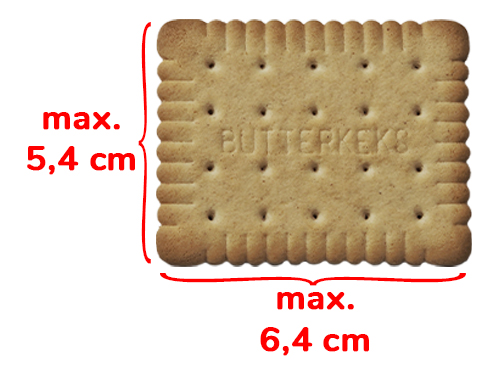
Step 1: Choosing the Cookies / Keks
If you have the original Leibniz Butterkeks available, use them, their shape is the most historically accurate. If not, you can use any other butter cookies, but make sure that their size does not exceed 5,4 x 6,4 cm, so that they fit into the package without any problems.
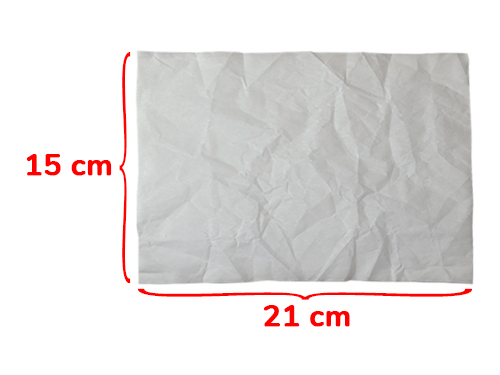
Step 2: Preparing the Baking paper
The cookies need to be wrapped in parchment or tissue paper. However, the most reliable version is baking paper, which guarantees 100% resistance to grease. Prepare a 21 x 15 cm piece of paper.
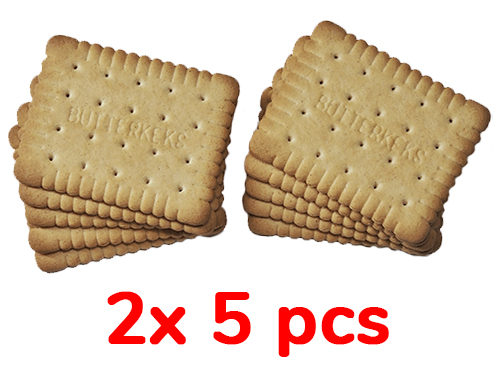
Step 3: Preparing the Cookies
Prepare two stacks of 5 pieces, which you place close to each other (as depicted on the period packaging). So you are packing 10 cookies in total.
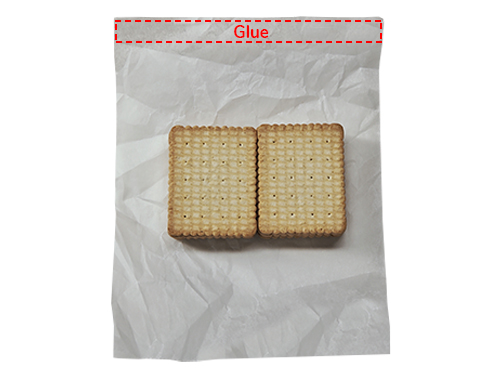
Step 4: First packaging (long side)
Place the cookies on the prepared paper and wrap them first along the long side. For easier handling and strength of the package, we recommend using a small amount of glue to join the paper.
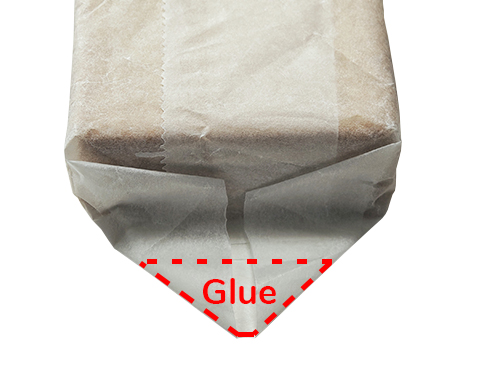
Step 5: Second packaging (short side)
Then fold and wrap the paper along the short sides. Use glue again to fix the flaps to create a neat and strong inner package.
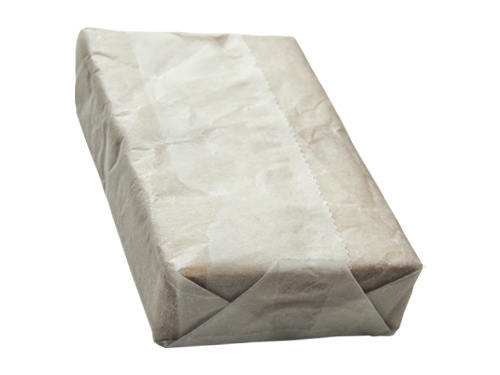
Step 6: Done
Your Leibniz keks package is ready for field conditions. Thanks to the inner layer of baking paper, the outer packaging will remain clean and free of grease stains even after a long time in the bread bag.
BUTTER KEKS ARE READY TO USE