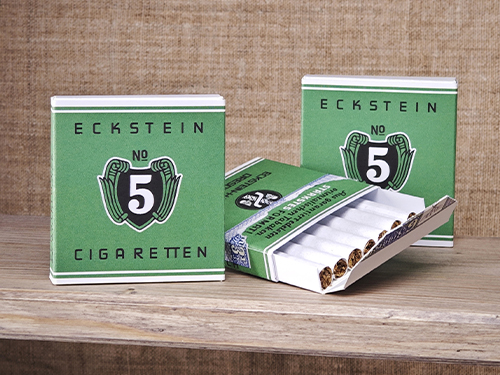
[How to] Pack cigarettes
History of Cigarettes
For the German soldier, cigarettes ranked among the most desired everyday items at the front. They helped fill endless hours of waiting, followed meals, and created small islands of routine in otherwise chaotic conditions. Command structures were fully aware of their importance, which is why tobacco became a regular part of the supply network and was distributed through rations, field canteens (Kantine), or parcels from home.
In practice, availability depended on logistics. Where transport worked, cigarettes were common. Where routes collapsed, they immediately turned into a prized commodity. In many sectors they functioned as an unofficial currency, traded for favors, food, or equipment. Offering someone a cigarette was one of the simplest ways to start a conversation or strengthen comradeship.
The market offered numerous brands, from better known commercial names to mixtures controlled by state monopolies.
Eckstein No. 5 belonged among the long-established and widely distributed types.
Sondermischung (“special blend”) frequently indicated flexibility in ingredients rather than exclusivity.
Regie 4 brands were typically linked to state tobacco administrations, including production in annexed Austria under Austria Tabakwerke AG.
Packaging and Everyday Reality
Unlike durable military equipment, cigarette packs were disposable. They were made from thin cardboard or paper, usually without any protective outer wrap. Moisture, pressure in pockets, and rough handling destroyed them quickly. Because of this, many soldiers preferred to carry their cigarettes in metal or leather cases, while the original packaging often ended up thrown away shortly after opening.
That is also the reason why authentic wartime packs are scarce today. Yet visually they belong to the most noticeable small details in photographs, museum displays, or reenactment impressions.
Now let's look at how to pack modern cigarettes into war packaging
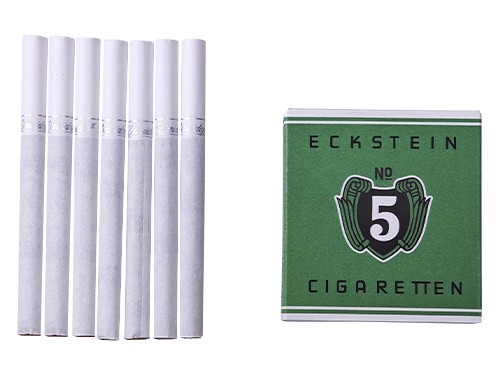
Step 1: Choosing the Right Cigarettes
To maintain a perfect historical look, we recommend using modern cigarettes with white filters. Once shortened and flipped, the white filter mimics the look of a traditional filterless cigarette.
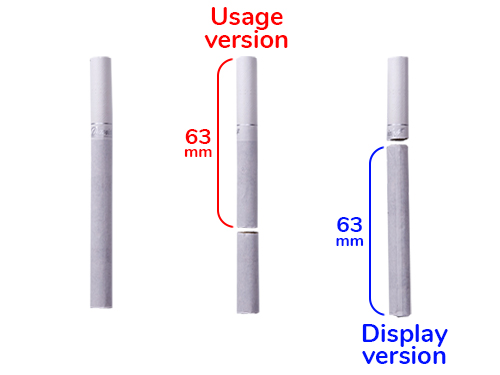
Step 2: Proper Sizing
Shorten the cigarettes to exactly 63 mm. If you plan to smoke them, cut the tobacco end and keep the filter. For display only, cut off the filter entirely.
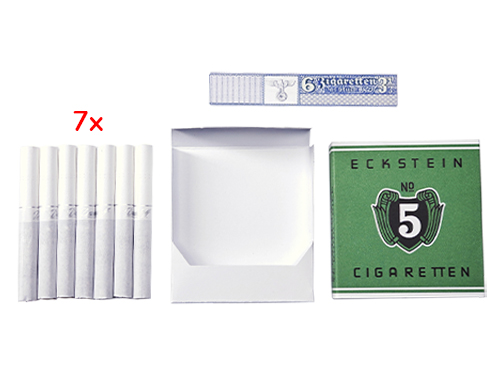
Step 3: Prepare the Set
Repeat this process for 7 cigarettes. This number corresponds to the historical capacity of this specific Eckstein packaging.
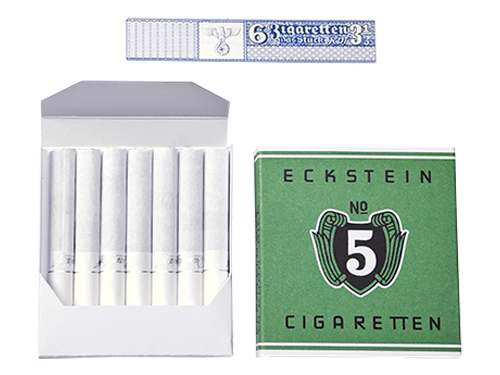
Step 4: Loading the Inner Tray
Place the shortened cigarettes into the inner tray with the filter side facing down. This hides the modern filter and prevents loose tobacco from spilling out.
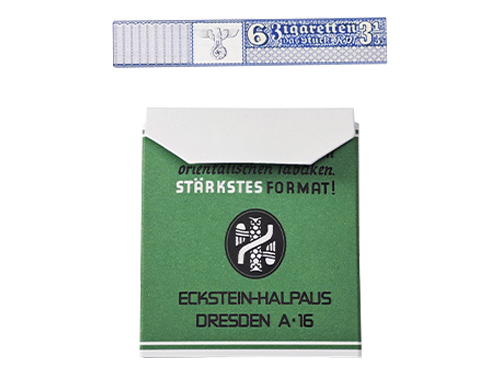
Step 5: Inserting into the Wrapper
Slide the loaded tray into the outer green wrapper. Leave the top flap protruding as shown in the illustration, ready to be closed.
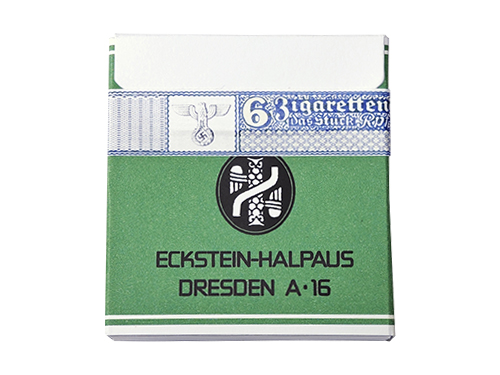
Step 6: Sealing with the Tax Stamp
Fold the flap and seal the package with the provided tax stamp (Steuerbanderole). Your cigarettes are now ready for the field.
ECKSTEIN CIGARETTES ARE READY TO USE