

These historical bottle label replicas bring an authentic atmosphere of the World War II era to any reenactment of period camps, barracks, or officer clubs. Several distinctive variants are available, each bringing a piece of the authentic material culture of the armed forces and civilian background at the time.
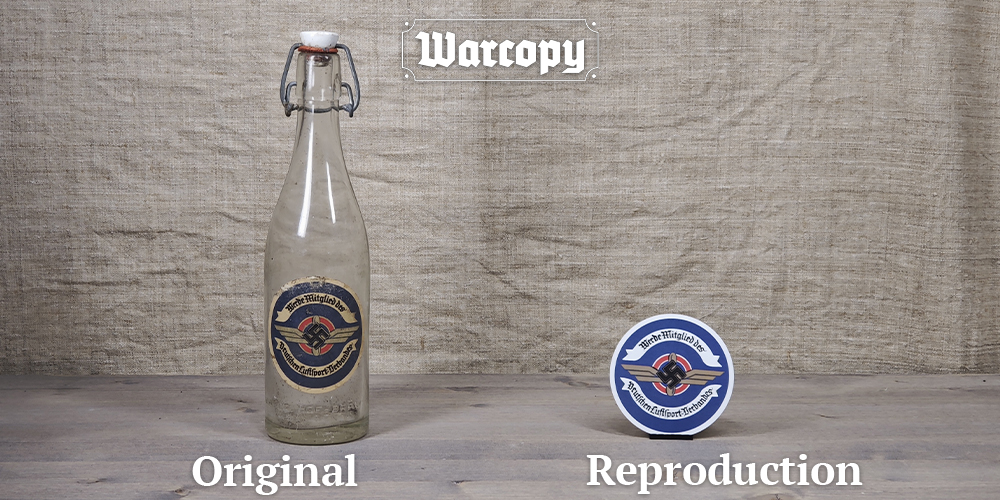
Luftwaffe beer (Deutscher Luftsport-Verband)
recruitment-themed beer label with the DLV emblem. The DLV was the Nazi-controlled aviation association of 1933-1937, before it was absorbed into the NSFK. This is a pre-1937 motif, so it suits an early-war or older-stock impression best. A faithful replica on a bottle with a characteristic white closure and emblem looks extremely convincing in exhibitions, film props, or static displays of airfield facilities.
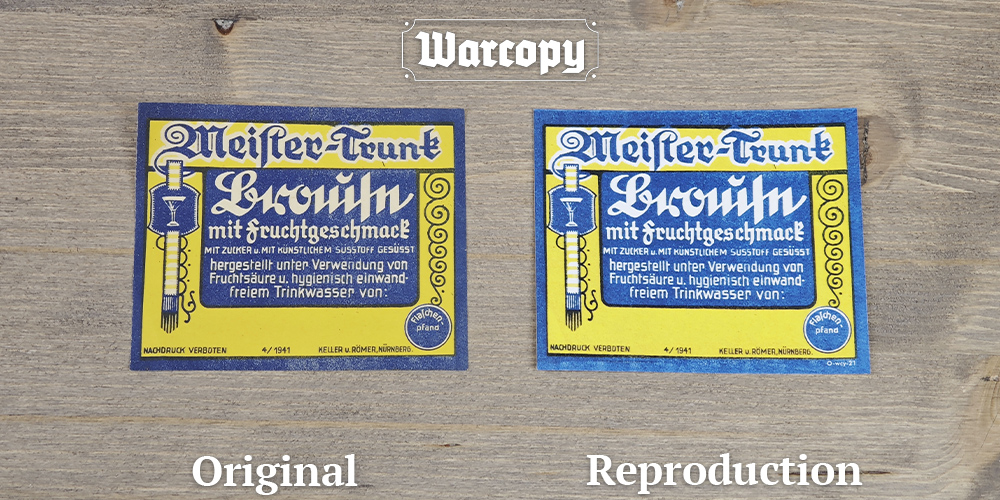
Meister-Trunk lemonade
This type of label refers to period non-alcoholic refreshment or table water, which were a common part of the daily routine in the rear and during training. Fruit-flavoured soft drink label dated 4/1941. The text states it is made with sugar and artificial sweetener, which fits the wartime sugar shortage and the widespread use of saccharin in German soft drinks. Bottles with swing-top closures and period graphics complete the impression of everyday life far from the front lines, in canteens or field kitchens. It is an ideal accessory for equipment crates or a table in a historical tent, helping to build a believable atmosphere.
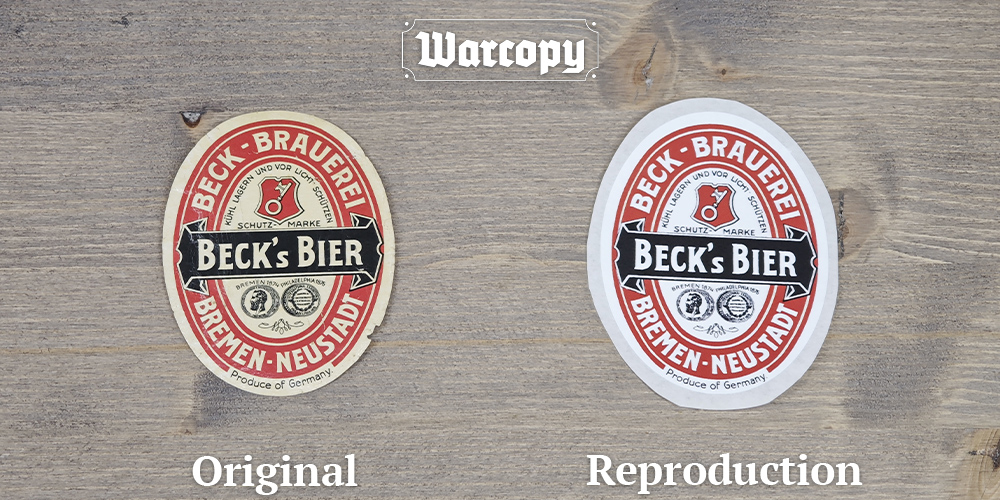
Beck's Bier
The traditional Beck's brand from Bremen held a firm place in German brewing before and during the war, supplying not only the domestic market but also selected units. This replica label with the classic red logo and Bremer Neustadt inscription is a faithful reminder of the German soldiers' favorite brew. It stands out wonderfully in officer messes, clubs, or in the field luggage of reenactors who care about every single detail.
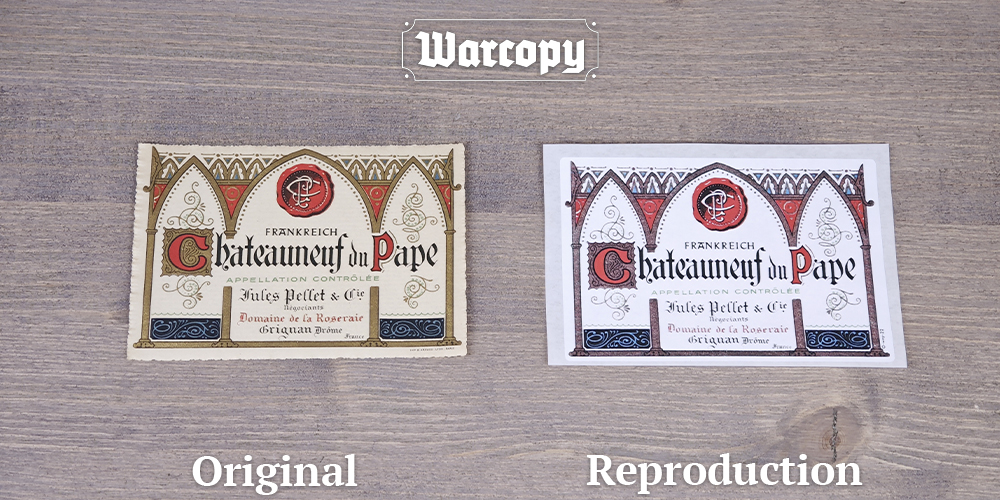
Chateauneuf du Pape
Famous French wine from the Rhône Valley was among the best that occupied French wine production had to offer high officer circles and German wine buyers. Bottles with this characteristic label became part of private supplies and celebratory banquets. French wine label with a German “Frankreich” country marking, as used on bottles intended for German forces in France. For historical reconstructions of staff tents or thematic exhibitions, this is an irreplaceable visual element.
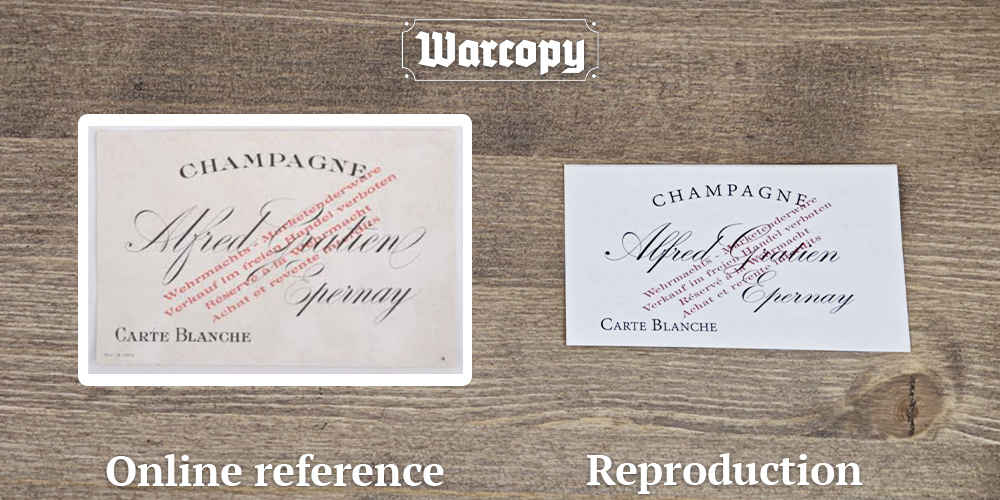
Champagne Alfred Gratien
French champagne represented a symbol of luxury, prestige, and loot that German officers acquired during the occupation of France and Western Europe. Brands like Alfred Gratien were sought-after items in Parisian restaurants and officer messes. Wehrmacht-supply label marked as not for sale on the open market. Champagne and wine were bought up in occupied France and issued to or sold to German troops, officers’ messes and Soldatenheime. This replica adds an authentic touch of elegance and decadence to wartime officer life on any exhibition or film set.
All labels are designed to be glued onto suitable glass bottles with modern or empty contents, easily providing a credible prop ready for immediate use.
Historical notes
Swing-top bottles were patented in 1875 and were in common use in Germany by the 1930s.
Wine and champagne were among the most common items German soldiers sent or carried home from France, which is why these bottles belong in a western-front impression.
| Category: | Food rations |
|---|---|
| EAN: | Choose variant |
| ? Dimensions (Champagne):: | 70x118mm |
| ? Dimensions (Fruit drink):: | 80x100mm |
| ? Dimensions (Wine):: | 90x132mm |
| ? Dimensions (LW Beer):: | 80mm |
Product rating
Leave a rating
List of ratings
 Steve Gard
 Ivan B.
 Myles Kimberley
 Donald Clark
Discussion
Be the first who will post an article to this item!


