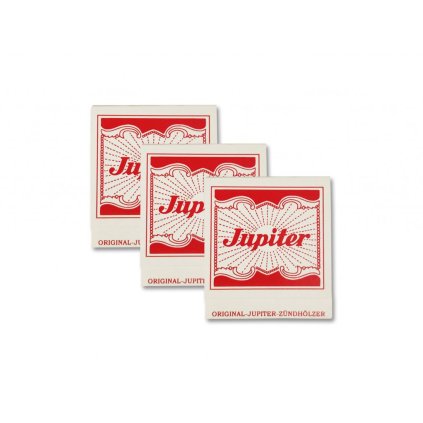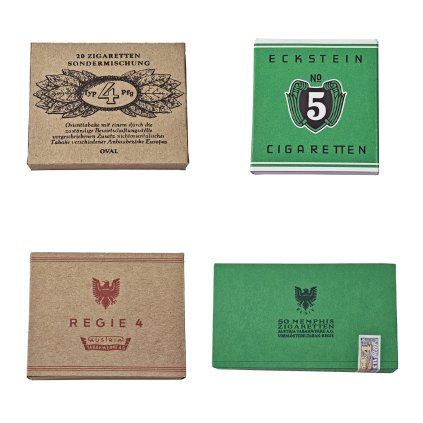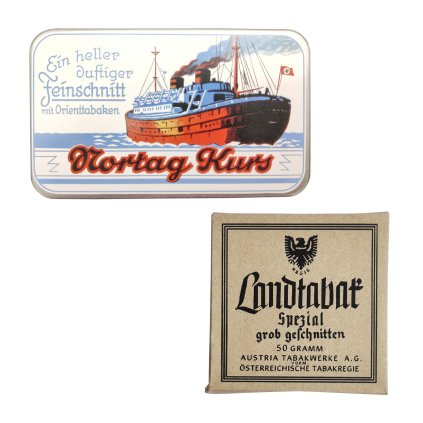

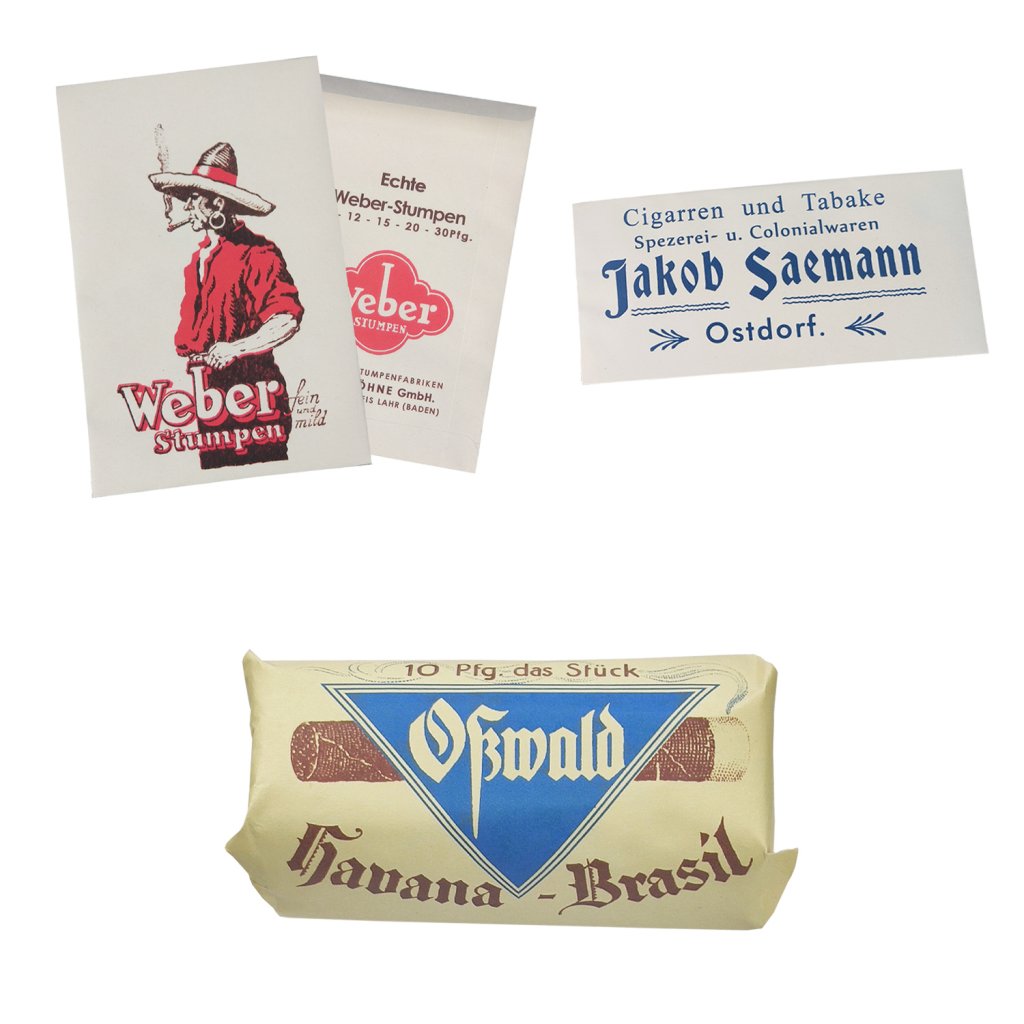
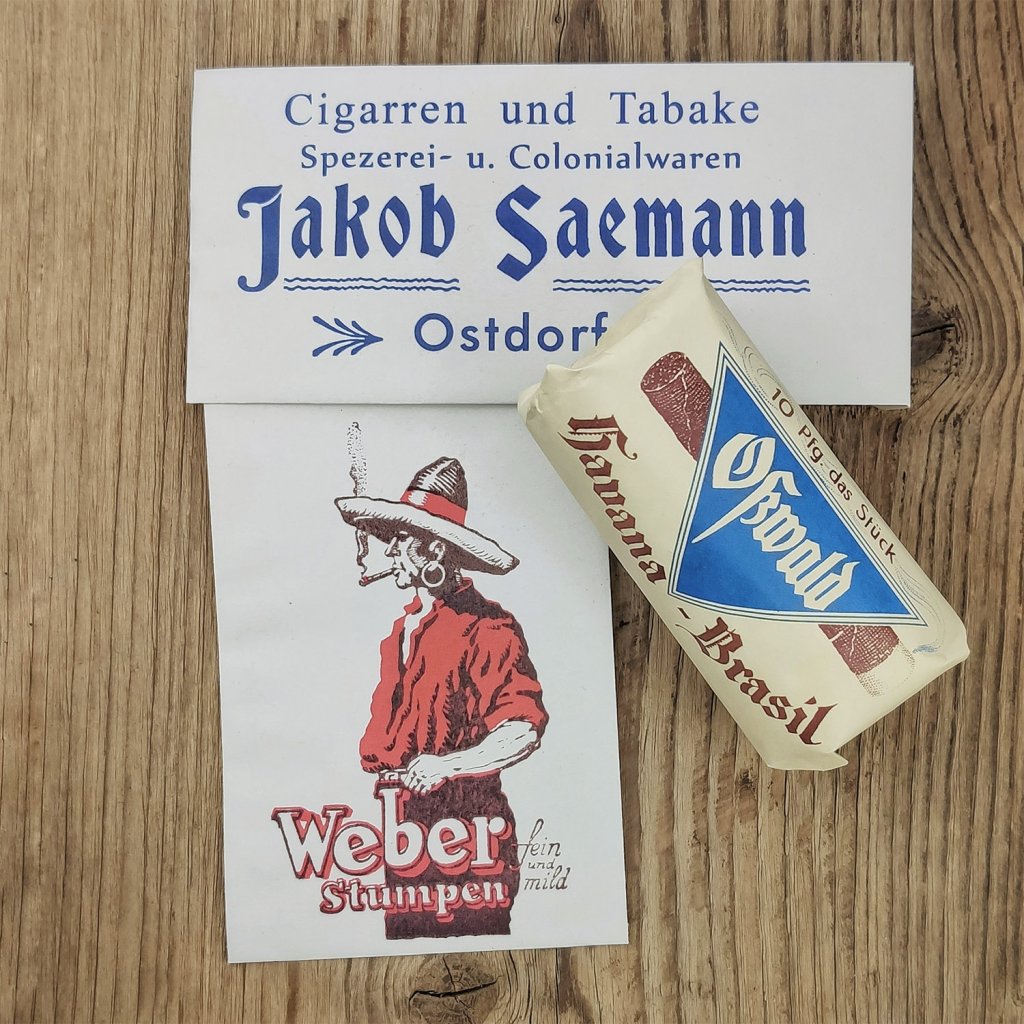



This three replica historical tobacco packagings brings the authentic reconstruction of period life. Tobacco products were a common part of daily consumption during World War II. From cheap cigars for mass supply to exotic tobacco blends for more demanding customers. These products faithfully illustrate the tobacco market in Germany. These replicas are perfect for reenacting, film props, exhibitions, and supplementing historical dioramas.
Sales Pouch Weber Stümpen
This is a faithful replica of the historical sales pouch (bag) for cigars "Stümpen" of the Weber brand. Although Stümpen belonged to the most accessible and thicker tobacco products, sought to differentiate its product. Its Stümpen carried the designation "fein und mild" (fine and mild), placing them among the better choices within this price category. The pouch features the iconic illustration of a smoking man on the front and was used for selling cigars individually. These pouches are ideal for supplementing field supplies or barracks equipment.
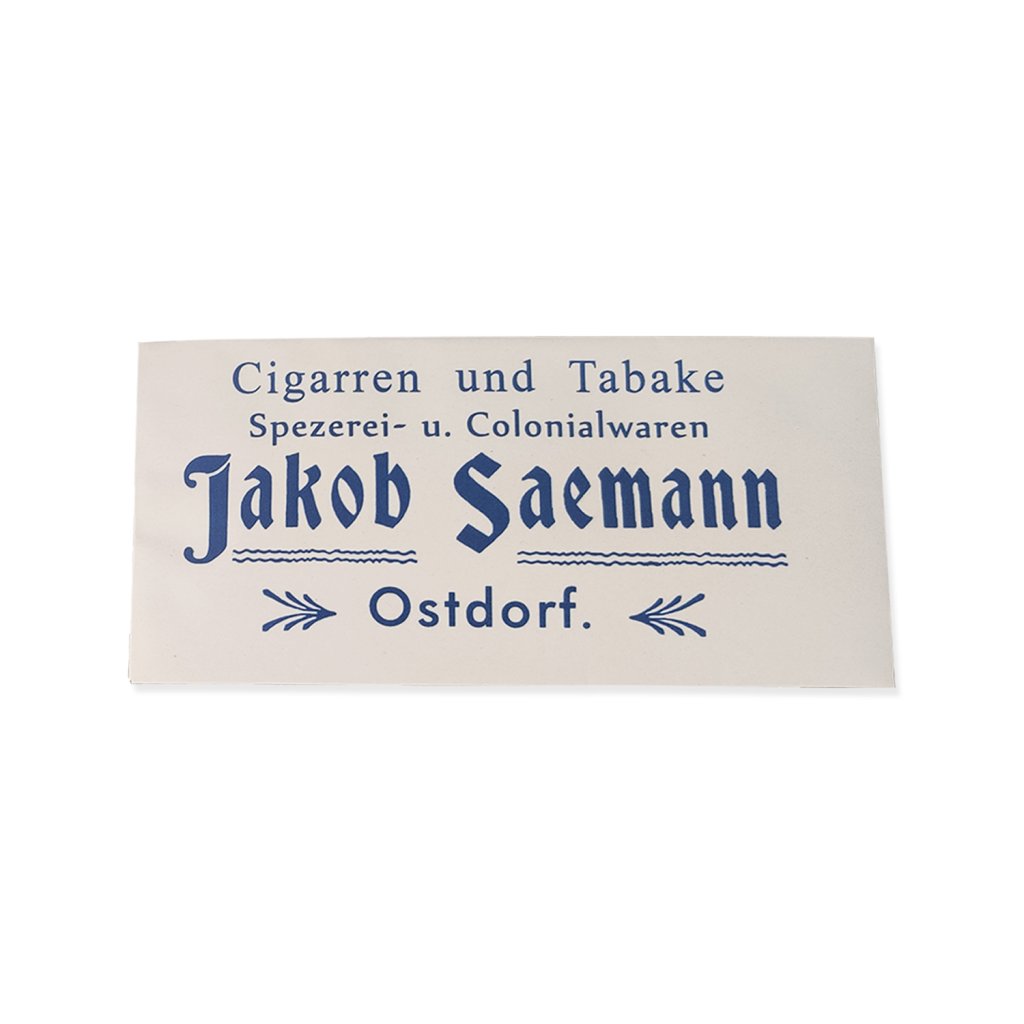
Cigar Envelope Jakob Saemann
This replica represents a period paper cigar envelope used by the merchant Jakob Saemann from Ostdorf. The envelope was used directly to wrap a smaller number of cigars bought individually, serving as common and inexpensive packaging directly from the shop. In addition to cigars and tobacco, the merchant Jakob Saemann also sold "Spezerei- u. Colonialwaren" (spices and colonial goods), meaning his shop was a local tobacconist and mixed-goods store in one. These envelopes were very common and represent an ideal, small period detail for a scene of a soldier coming from the shop or to illustrate rural supply.
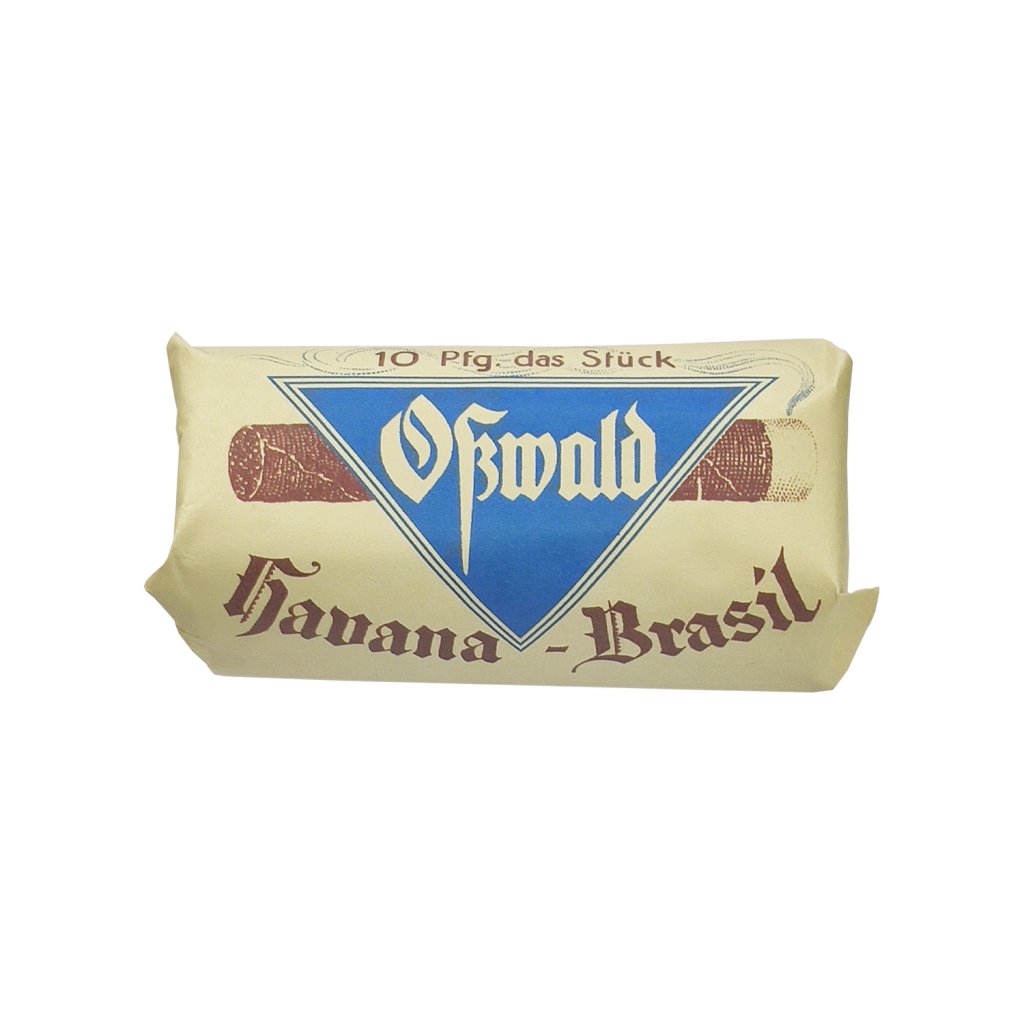
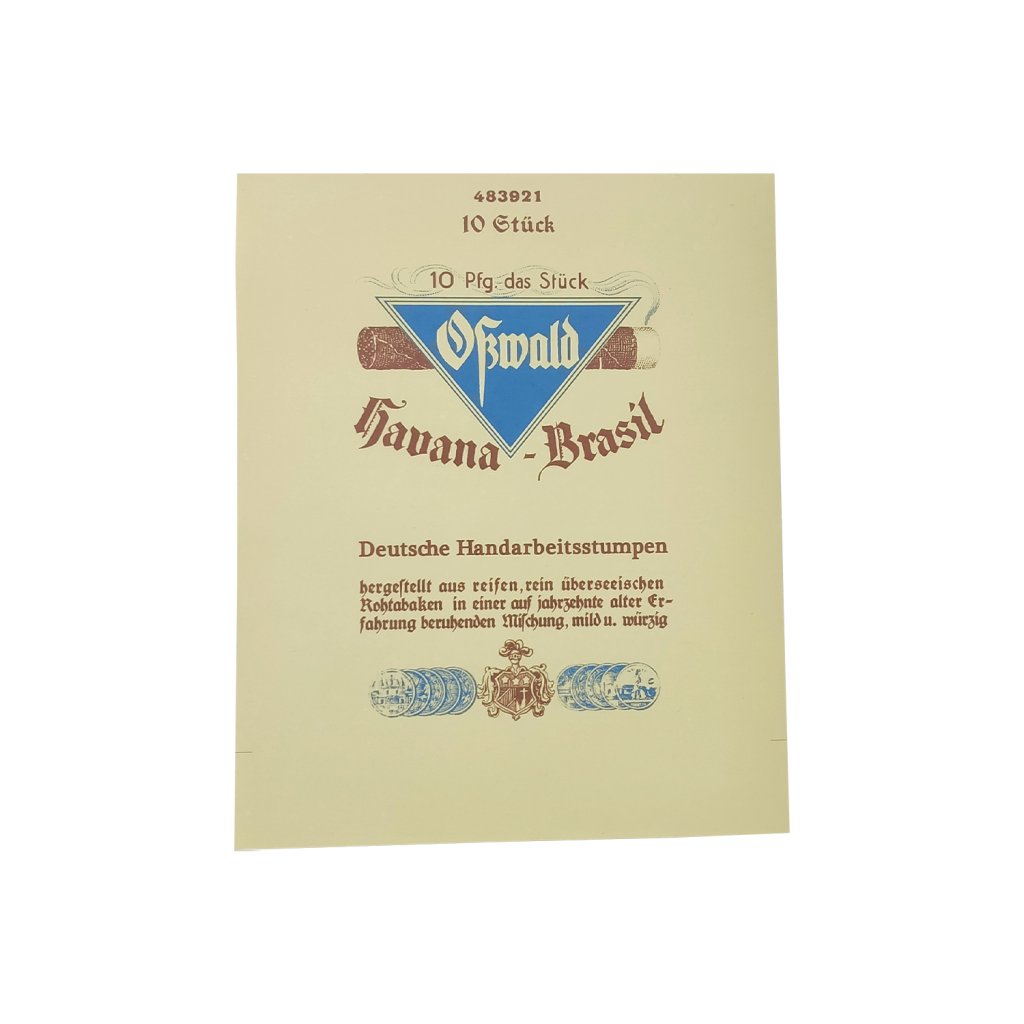
Oßwald Havanna – Brasil
This replica wrapping paper represents higher-quality Oßwald brand cigars. The inscription Havanna – Brasil showing that it was a blend of exotic tobacco, specifically Cuban and Brazilian in origin. These were German handmade stümpens, manufactured from ripe, pure overseas raw tobacco in a mixture described as mild and spicy. Oßwald cigar packaging was aimed at customers seeking better, more aromatic tobacco. The packaging typically contained 10 cigars, with the price of one cigar being 10 Pfg. This prop excellently illustrates the presence of more luxurious tobacco articles on the market, although their availability may have been significantly limited during the war.
| Category: | Tobacco |
|---|---|
| EAN: | Choose variant |
Be the first who will post an article to this item!